St. Louis Archives portfolio
January-September 2026
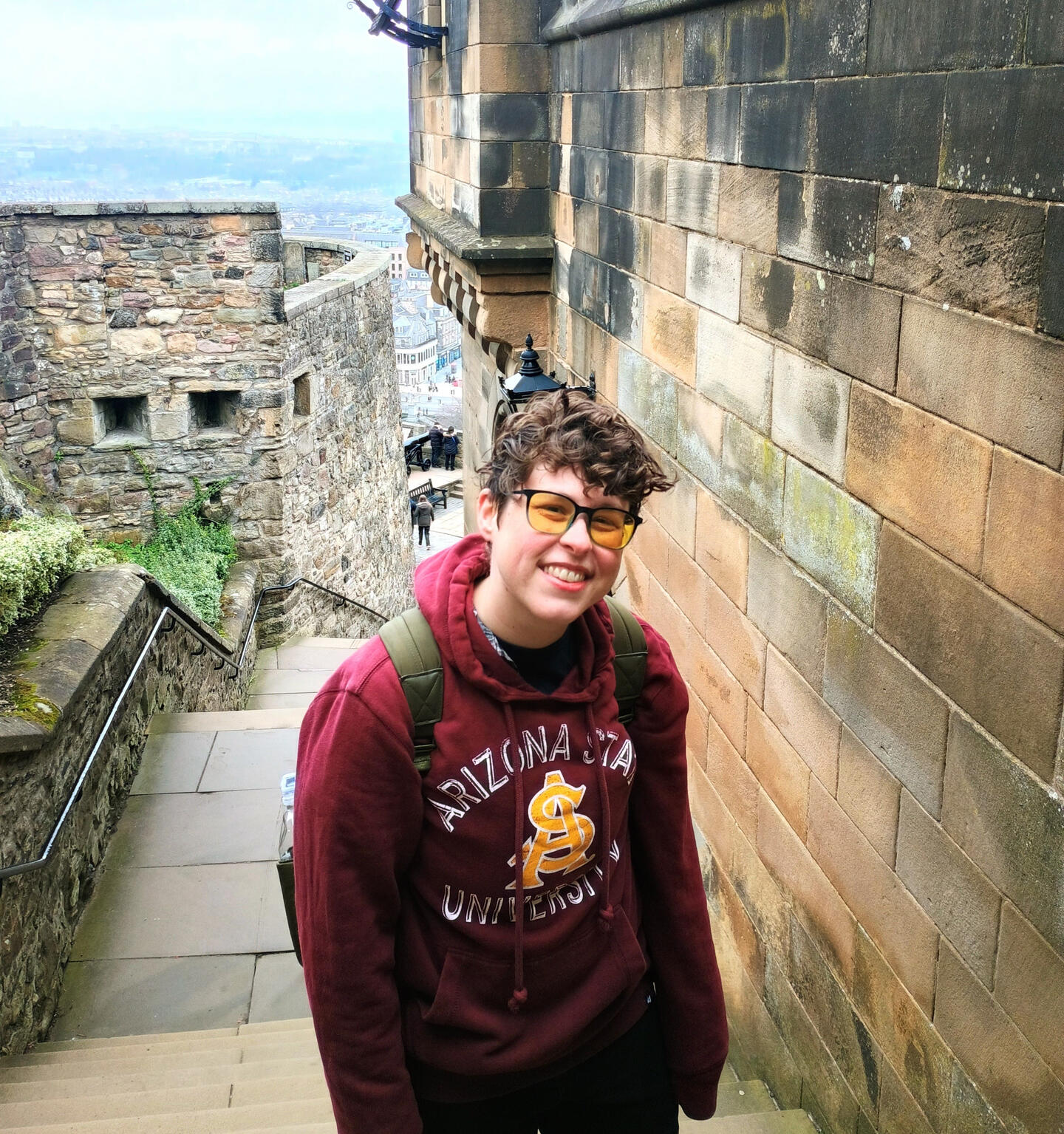
Layne Madden
Missouri State Archives-St. Louis
Jan-May 2026Archives InternshipDeveloped metadata for the Circuit Court archives database for divorce cases.Worked with Microsoft Access and Microsoft Excel.Washington University-St. Louis
June-Sep 2026Researcher in ResidenceCollected archival images and wrote an exhibition for the non-profit PROMO.Archives TrainingProcessed and developed finding aids for WashU's LGBTQ+ and illustration collections.Worked with ArchiveSpace and Microsoft Excel.
This portfolio was developed through Indiana University Luddy, where Layne is working toward a Master's in library and information science.They are specializing in archives management.
Missouri State Archives-St. Louis
Divorce Collection Database
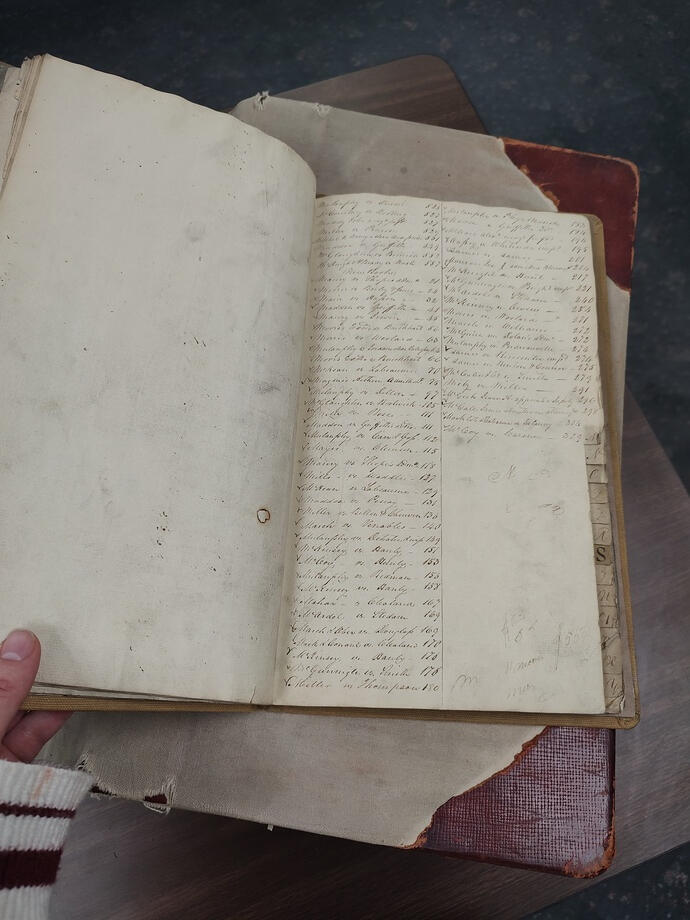
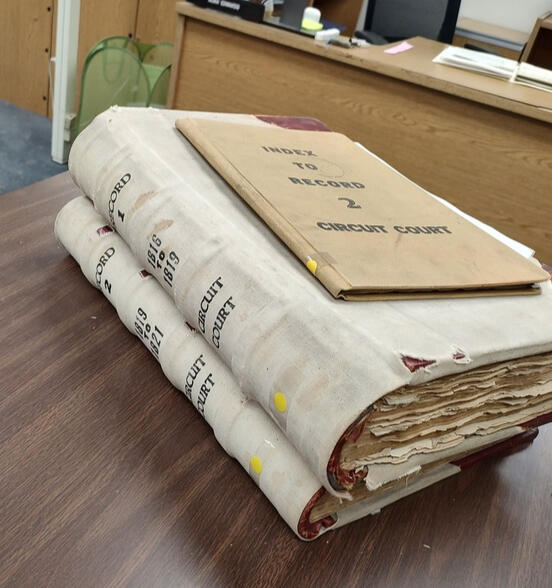
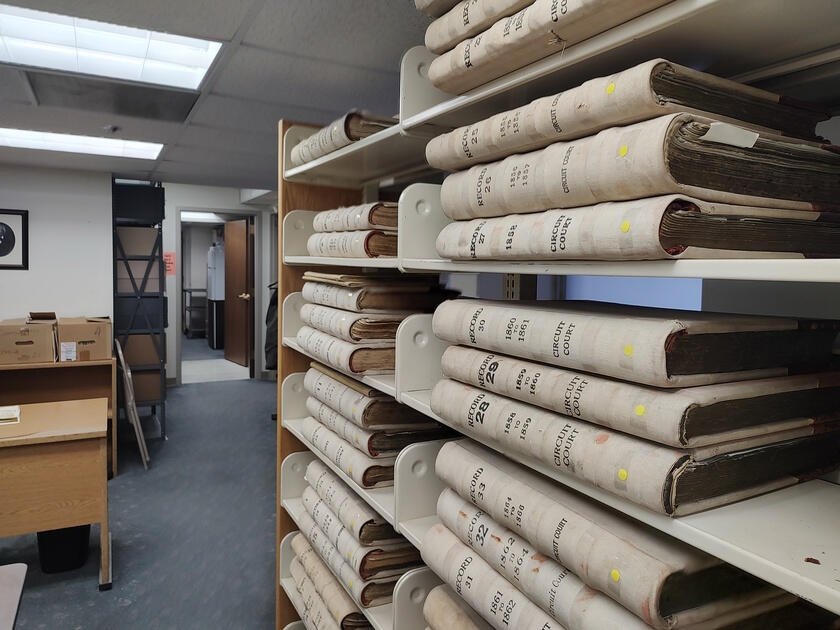
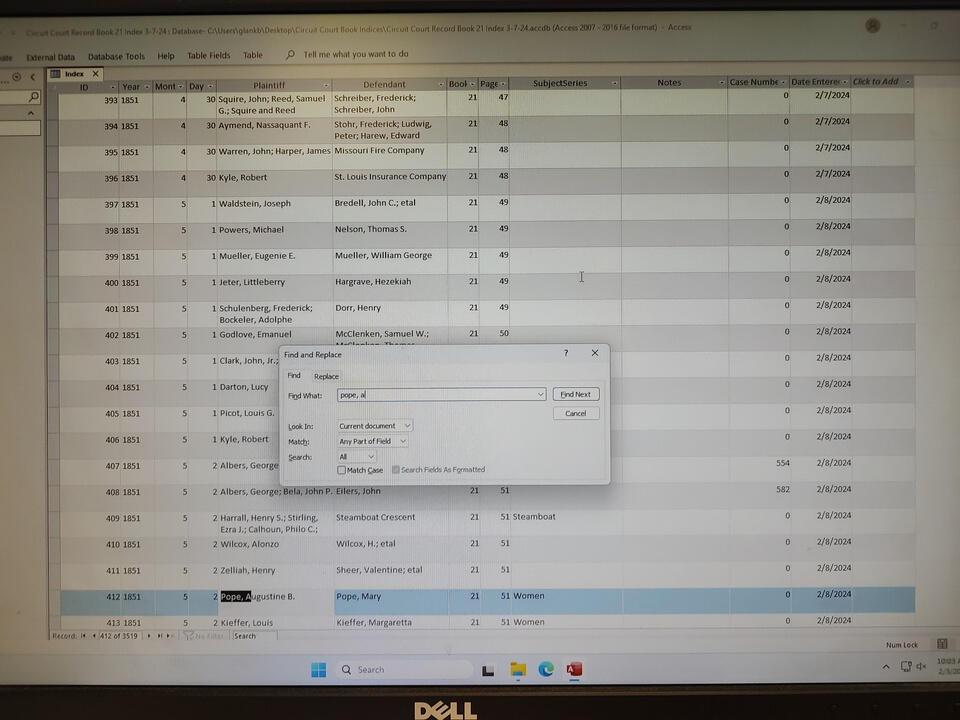
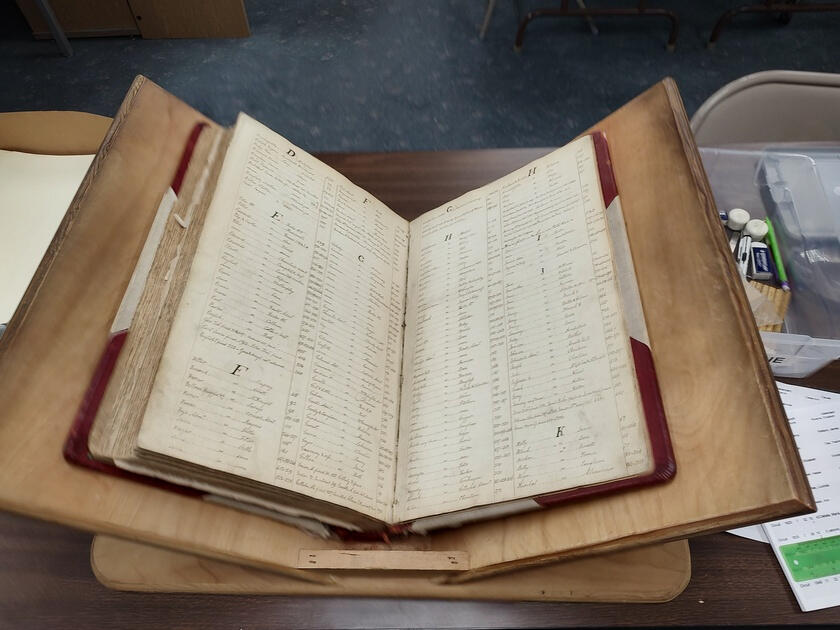
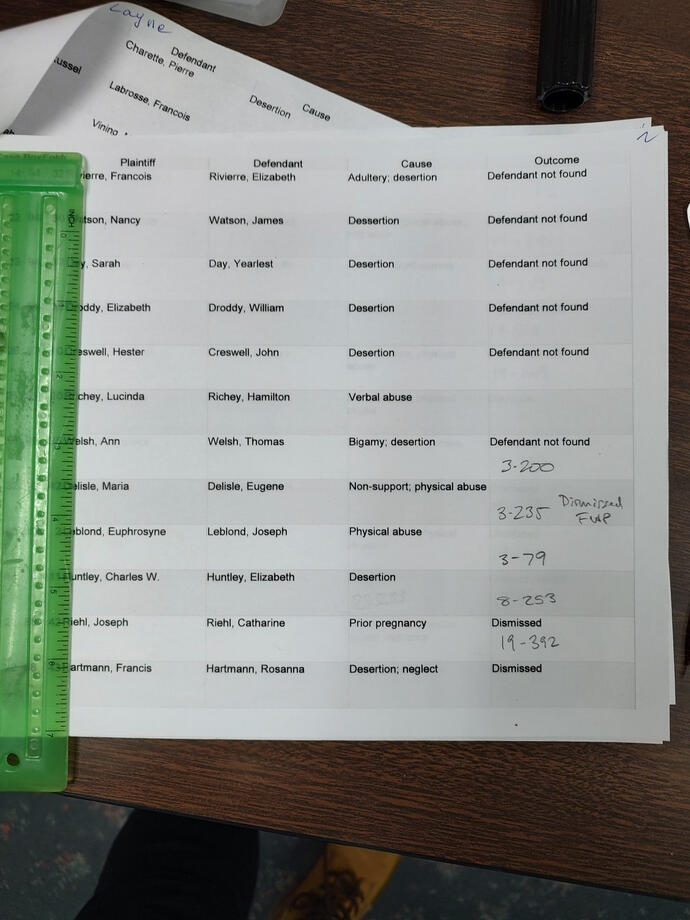
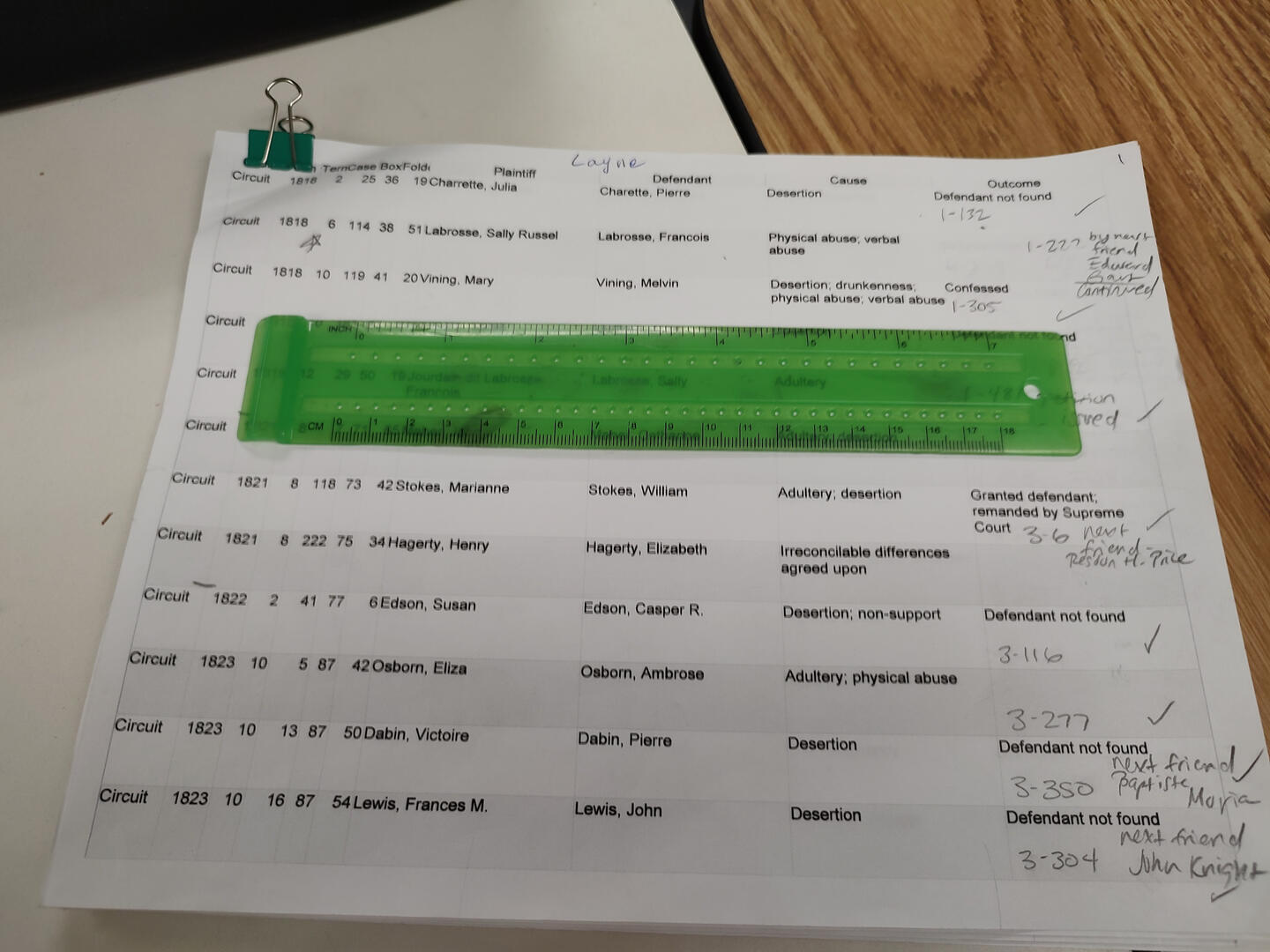
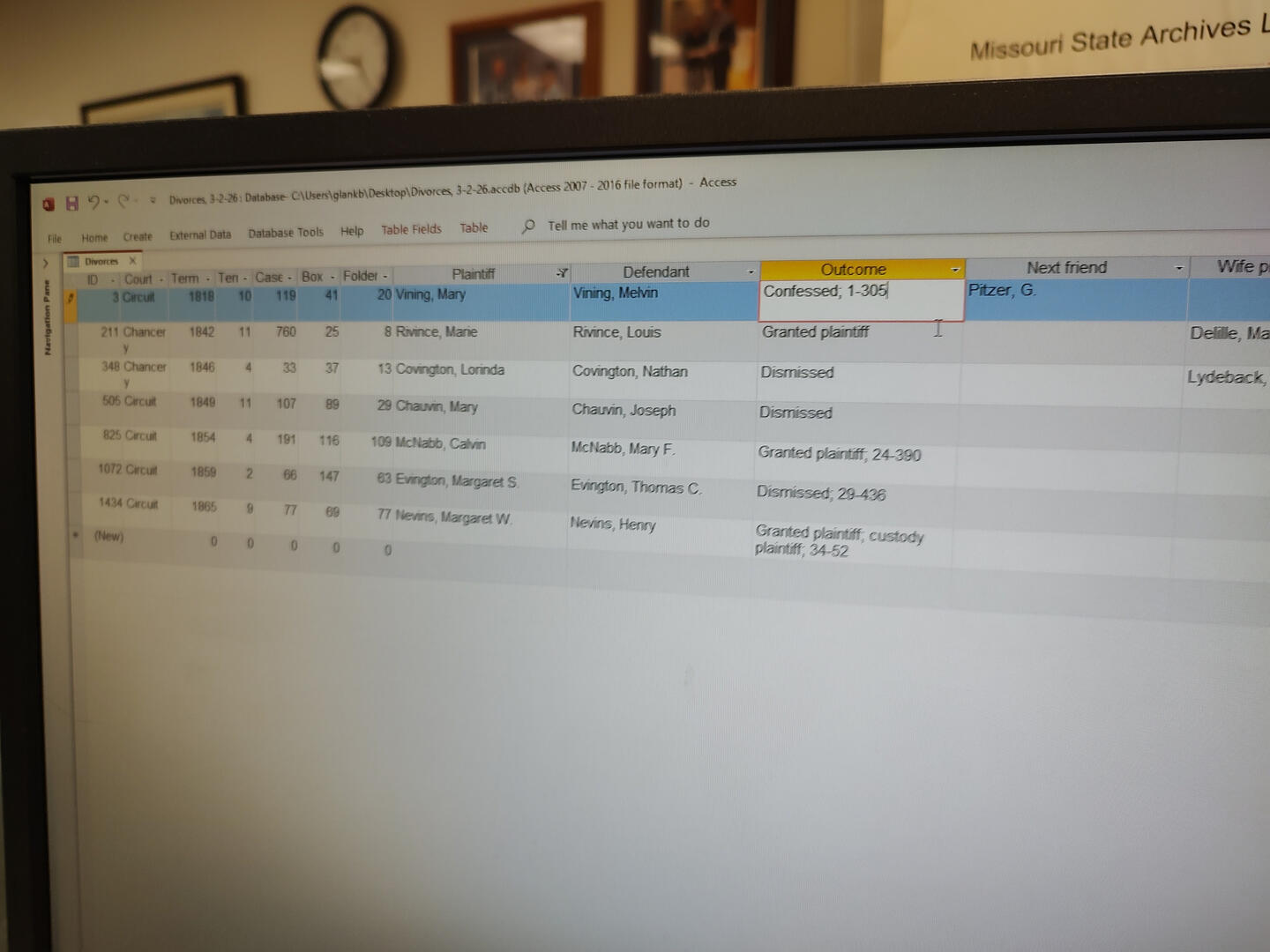
January-May 2026I worked with my supervisor, Bill Glanker, to develop finding aids for St. Louis Circuit Court divorce cases from the 19th century.The keywords I contributed will be used in the divorce cases database, which is a special collection within the St. Louis circuit court archives.Processing1. I searched through authority record titles within the St. Louis Circuit Court database spreadsheets. I used these records to find the page within the original 19th century book indexes that recorded the final verdict of the divorce case.2. I located the case within the 19th century book indexes. I read through the verdict and created metadata about the case. Metadata included the page where the case was recorded, data corrections on name spellings and dates, and information about custody/property exchange.3. I submitted keywords about the cases to Microsoft Access in order to develop the special collection for public research and accessibility.Keyword examples: Dismissed, by next friend, no one appearedImages of my work process are included below, as well as links to the collections I submitted metadata toward.The official divorce database is still in development and can not be accessed yet by the public. Please contact Bill Glanker, Supervising Archivist, for further information.
Internship Reflection
Since January 15th, I’ve been working with the Missouri State Archives in St. Louis. I’ve been collecting metadata for a special collection my supervisor is developing on the divorce documents within the St. Louis Circuit Court Historical Records Project.The Circuit Courts collection dates between 1787 to 1875 (Missouri State Archives St. Louis). Some of the collection is on microfilm, but my supervisor has said that the microfilm they used is not being made anymore, so they will likely stop that initiative.The case files are still being processed and even reprocessed, as many of these files were processed in the 1970’s with different materials and priorities. Some of them are processed in such a way that they need to be cleaned again, as a cover with adhesive was placed over the documents. They need to be separated and placed within acid free folders that include new metadata about the contents on the outside. It is an extremely long-term project. My supervisor jokingly mentioned that his grandchildren will be the ones to finish it out.Currently, there are a few other special collections listed within the St. Louis Circuit Court Historical Records Project database: Lewis & Clark/Corps of Discovery, Freedom Suits, St. Louis Fur Trade Cases, Native American Suits, and Civil War era (1861-1868) (Missouri State Archives St. Louis). The keywords and metadata for these collections were chosen according to public interest in certain lines of research.In The Organization of Information, Joudrey (2025) mentions that “it is simply not possible to create a perfect, one-size-fits-all metadata schema that will suffice for the various needs of different communities. Diversity in metadata is both desirable and unavoidable” (p. 133).The metadata for these projects, including the special collection on divorce documents, is not standardized. There are no authority records or MARC records within the Library of Congress to use. When I search for and record metadata within the historical, hand written indexes and records that were kept by the clerks of the circuit court between 1840 to 1870, I am copying down keywords that my supervisor came up with according to what he believes people will be the most interested in searching for.My experience so far with metadata has helped me to realize that archives metadata/finding aids are flexible and developed according to the needs of the user. Additionally, not all data that can be collected from a collection is necessary to record within surrogate records. We need to speak with researchers and understand what their needs are so that we can properly organize a collection. It is wasted effort to develop unused finding aids for a collection.Libraries and archives need to be active participants in their communities so that they can serve them properly. There’s no real guide for how to do this, but rather than making up keywords for what we think might be necessary, we need to be sure that the archives are accessible to the people who will use them the most.References
Joudrey, D. N., & Baldoni, E. (2025). The Organization of Information. Bloomsbury Libraries
Unlimited.Missouri State Archives St. Louis. (n.d.). St. Louis Circuit Court Historical Records Project.
Programs & Projects. https://www.sos.mo.gov/archives/projects/stlcircuitcourt
Washington University-St. Louis
PROMO Exhibition
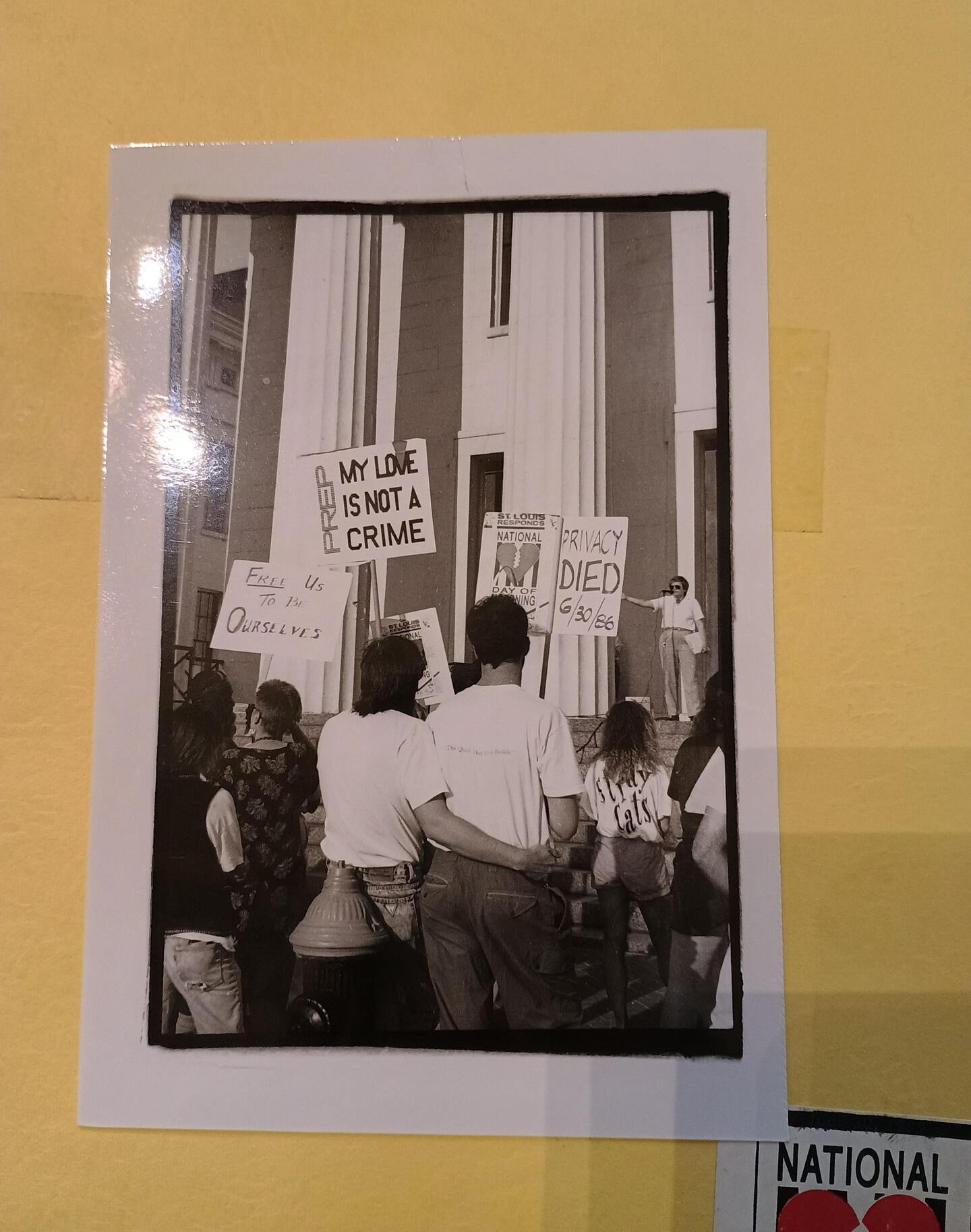
June-August 2026PROMO is an LGBTQ+ grassroots organization that was founded to lobby for privacy rights laws in Missouri.I developed eight themed exhibitions that were created to roll up for travel. I presented them at a gala on September 26, 2026 and then PROMO toured them across Missouri.For this exhibition, I was required to develop an overall narrative across 40 years of history, from 1986-2026.Expo Process1. I gathered research materials from WashU's local history collection, the Missouri Historical Society, and the State Historical Society of Missouri. I took pictures of what I'd found and uploaded these to the software Box. If I found visually interesting materials, I requested a high resolution scan.2. I created keywords in Box for the materials I'd gathered. I sorted them by date, significance, and event.3. I created a timeline of major events in PROMO's history and sent this to their communications department.4. I developed a written narrative of events with clear themes. Then I worked with my supervisor, Miranda Rectenwald, to divide this information up into an easily understood visual format.5. Our team included a designer and the communications department of PROMO. I kept in contact with members of the group through Google Docs to discuss revisions and additions to the project.I added some of my research to the Mapping LGBTQ+ St. Louis Project.Expo will be completed on September 26th, 2026**Exhibition work is included in the PROMO Portfolio LinkProcessing with DIRA and Local History Collections
August-September 2026LGBTQ+ Collection
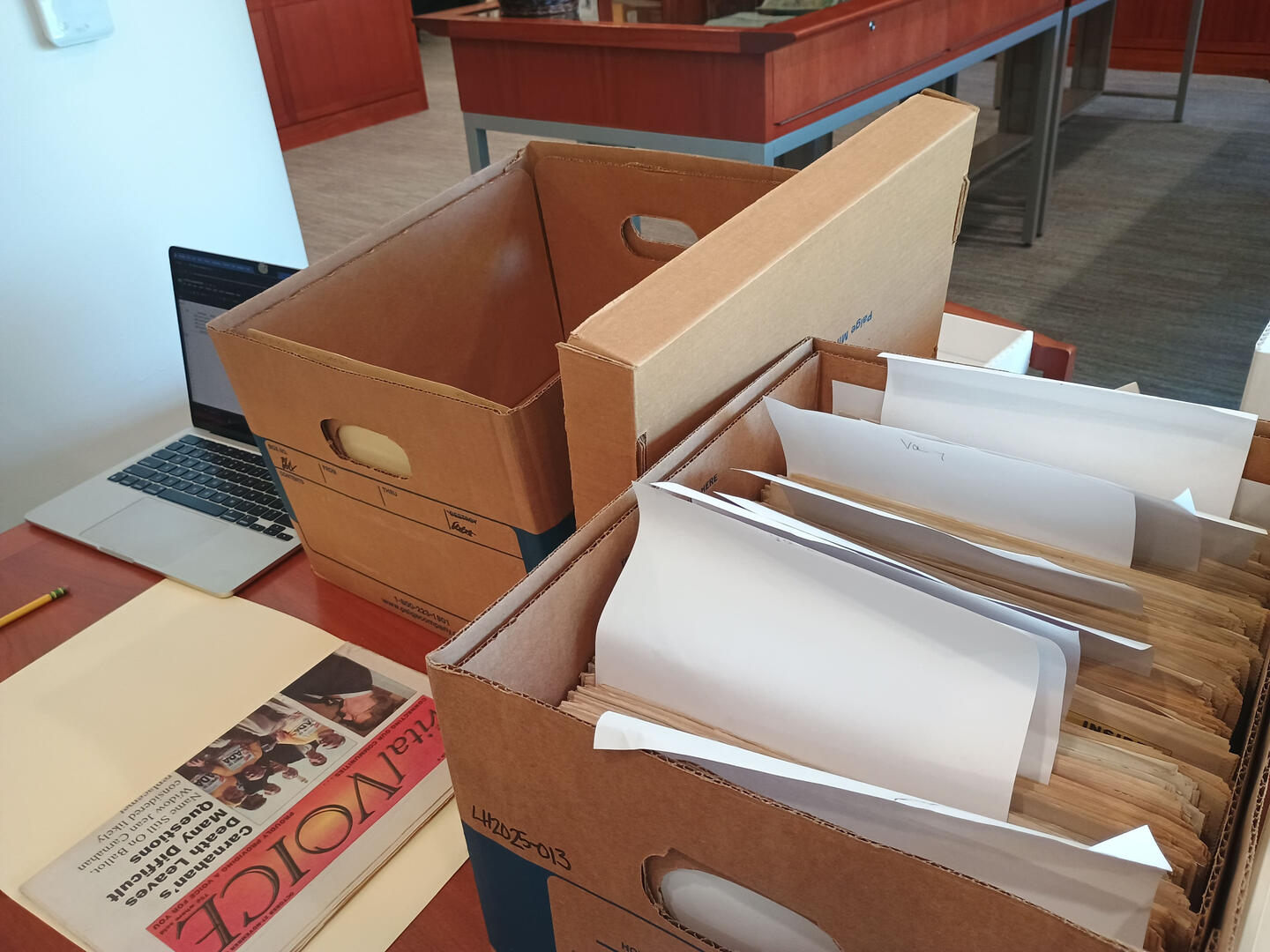
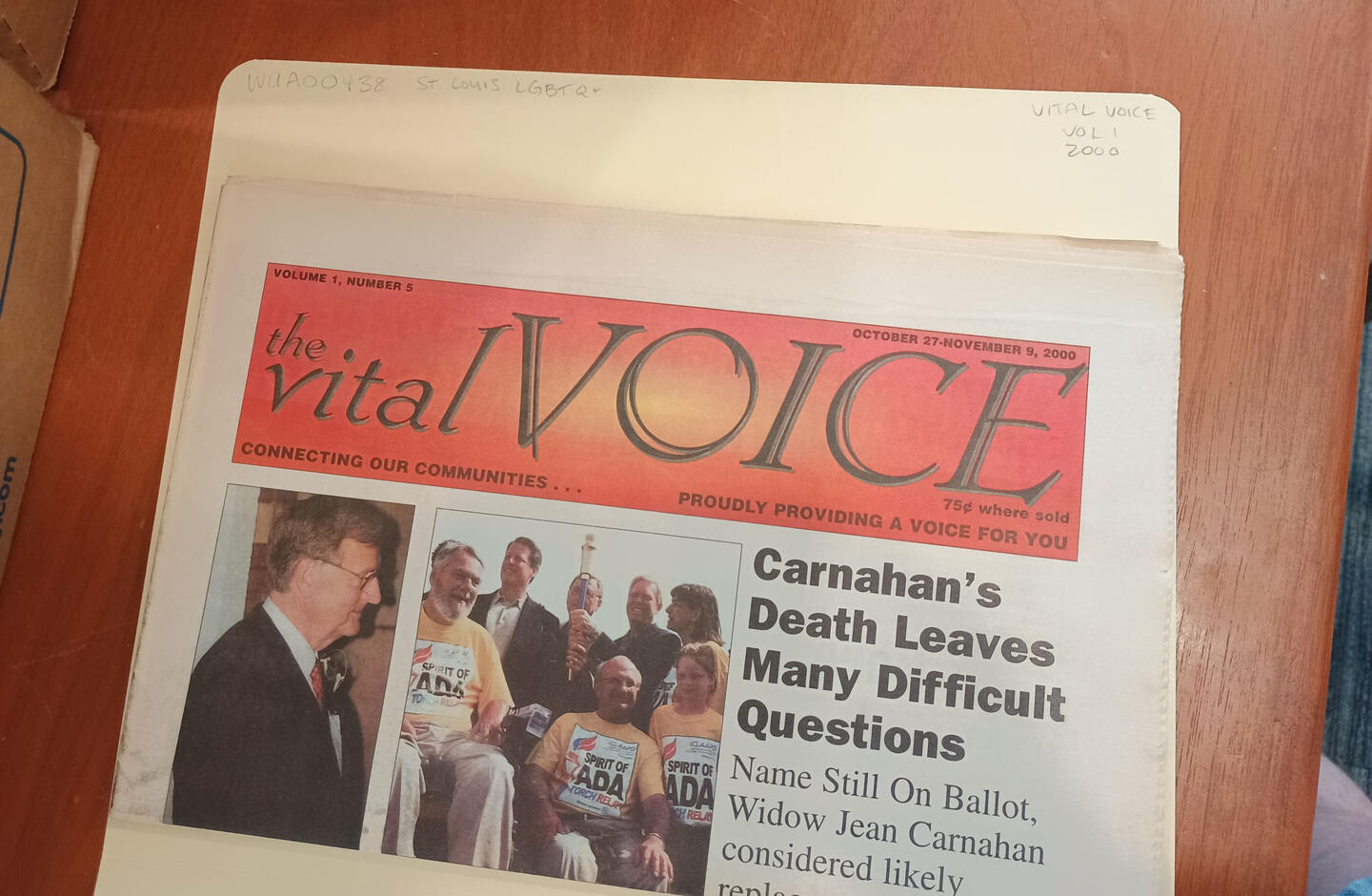
Added Vital Voice newspaper (2000-2020) to LGBTQ+ collection at WashU.Created spreadsheet to track date ranges, item number, volume numberAdded metadata to ArchiveSpace for database access
Internship Reflection
I began work with Washington University in St. Louis in June. I collected images and information from three different archives across St. Louis (WashU's local history collection, Missouri State Historical Society, and St. Louis Historical Society). I put them together into a narrative that explains the last 40 years of PROMO’s history.PROMO is the LGBTQ+ nonprofit we are developing the exhibition for. I created my own digital collection in Box, linking keywords to different images I’d scanned in, and then formatted all that information into a chronological outline to send back to PROMO’s communications department. I sorted my timeline into eight individual narratives with different themes, such as the development of their logos and the places they held their meetings in St. Louis. The overall theme that I wanted to portray was the strength of the LGBTQ+ community involved with PROMO.My supervisor instructed me in the best way to sort this information so that it would be easily understood from a visual perspective. Thankfully, we’re working with a designer, but we have to provide a detailed breakdown of what images to use and how to structure them. We also need to be sure everything we want blown up is at a high resolution. I think the most difficult part of all of this is the fact that we can’t use the physical objects in the display. We have to be on top of communications across many levels.I also visited the Dowd Illustration Research Archive, which is the illustration and design archive with WashU, and toured their facilities. The manager over paper and illustration processing gave me training on submitting metadata to Archive Space. I learned to work with both spreadsheets and the actual software of Archive Space.The Smithsonian Institution's Guide to Interpretive Writing for Exhibitions (Smithsonian, 2021) states the most important concept I’ve learned: “Visitors have limited time and attention” (p. 15). Even though I started with an essay format for my information, my supervisor told me I needed to break it down into bullet points that could be understood on an eighth grade reading level. It didn’t matter if the writing flowed, it just needed to be understood with a glance. I used this guide to support me while I worked on
writing the exhibition text. I discovered that I’m very good at developing a narrative for exhibitions and can easily recall the different pieces I want to display.In the Historical Hazards of Finding Aids, Wiedman (2019) argues that “libraries are all about systems, whereas museums are all about programs” (p. 25). He goes on to explain that archives and libraries have built systems around their materials that make them hard to access, whereas museums place materials on display for public education. Exhibitions explain the significance of objects in an understandable way. Rather than putting them behind layers of institutionalized structure, the objects are used as evidence of their own importance.All of the structure of libraries and archives is necessary, but I feel archivists might forget the importance of public accessibility if we don’t become involved in exhibitions. Exhibitions create opportunities for the public to interact with the materials we keep. Through programming and outreach, we build context around our work. The organizational structures we create must always come back to ease of access for the people who need the materials.ReferencesSmithsonian. (2021). The Smithsonian Institution’s Guide to Interpretive Writing for
Exhibitions. https://exhibits.si.edu/wp-content/uploads/2021/09/SI-Guide-to-
Interpretive-Writing-for-Exhibitions.pdfWiedeman, G. (2019). The historical hazards of finding aids. The American Archivist, 82(2),
381–420. https://doi.org/10.17723/aarc-82-02-20
About
Layne is an MLIS student with Indiana University Luddy.They are working towards a specialization in archives management.They have organized educational outreach programming for Laumeier Sculpture Park, St. Louis County Library, and St. Charles City-County Library.Layne is passionate about developing accessibility to educational resources of all kinds. Their work with primary sources has focused on expanding the American historical narrative to include overlooked populations.They live in St. Louis, where they work in engagement and community outreach coordination with St. Louis County Library.